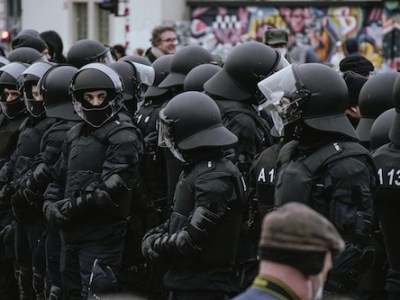
Breakdown of Advanced Civilizations
Sixth in a series on Civilization What causes an advanced civilization to fail? I’ve written about the importance of specialization and cooperation. Obviously, breakdown in civilization is likely also attributable to these two traits. Cooperation without specialization leads to one form of failure, in which all participants do the same kind of work while sharing…
Keep reading
Civility and Civilization
Fifth in a series on Civilization In my last essay, I wrote about the importance of cooperation, how civilization is based primarily on two factors: specialization and cooperation. That’s how we humans get past the daily need to feed our families. Cooperation requires each individual to give up something to gain the greater good. We…
Keep reading
Cooperation in Civilization
Fourth in a series on Civilization When I envision a future world in my science fiction, of course I draw upon our current world. People don’t change, and haven’t in recorded history. We love, we fight, we work to feed and support ourselves and our families. Technology provides new opportunities that might change the way…
Keep reading
Levels of Civilization
Third in a series on Civilization Most of my science fiction stories take place in what I would call “advanced” civilizations. Sci-fi in general considers the impacts of science on people, so that assumes an advanced level of science. This is not generally as true for fantasy stories, which can often be placed in a…
Keep reading
What is Civilization?
Second in a series on Civilization One of the fascinating challenges of writing science fiction is “world-building,” the creation of a realistic society to surround and underlie the story. Over the years, I have often been surprised to find sci-fi books—even Hugo award winners— that fail to create a realistic society. Authors create just enough…
Keep reading
Civilization—the System
First in a series on Civilization Some years ago, my wife and I lived full-time in a motor home. We traveled the United States from Florida to Idaho, from New Mexico to Virginia. During COVID, we stayed in the Rocky Mountains, well away from civilization. And yet—civilization was there. Town after town, we saw business…
Keep reading
New Release: Verdant Divided
My newest novel releases today on Amazon! Find it at this link. Verdant Divided: Technology Meets Holy War A simple pilgrimage with miracles runs afoul of both technology and Holy War. Award-winning author Doc Honour spins another fascinating tale of people caught in their own dilemmas on the planet Verdant. Jake Palatin’s empathy technology, the…
Keep reading
Science and Emergent Behavior
Twelfth in a series on the edges of science The more complex the system, the more difficult it is for science to function well. In earlier posts, I’ve written about how science bases its Truth on the control and repeatability of experiments. If one scientist reports a new theory, proven by his experimentation, other scientists…
Keep reading
Science and Preconceptions
Eleventh in a series on the edges of science Somewhat surprisingly to me, my experience of scientists (and engineers) is that we tend to be a rather arrogant crowd. We know a lot. Worse than that, we know that we know a lot. We have a tendency to look down our noses at those “civilians”…
Keep reading
Science and Peer Review
Tenth in a series on the edges of science Science often presents itself—or rather, scientists present themselves—as objective truth. “This is what we know.” Yet what we “know” is often based on research papers published in peer-reviewed journals. For nearly twenty years, I was an associate editor of Systems Engineering, the journal of the International Council…
Keep reading
Science and Models
Ninth in a series on the edges of science I have taken some months of hiatus in writing these essays on science—not because I ran out of topics, but simply due to personal issues. There is no dearth of topics about the limitations of science. I’m very glad we have and use science. It has…
Keep reading
Science and the Spiritual
Eighth in a series on the edges of science It is fashionable to consider science somehow to be contrary to faith. Many have replaced faith in God with faith in science. It was not always so. Australian historian Peter Harrison wrote “…many of the leading figures in the scientific revolution imagined themselves to be champions…
Keep reading
Science and Dimensions of Truth
Seventh in a series on the edges of science: exploring how science fails when presented with truth on different dimensions.
Keep reading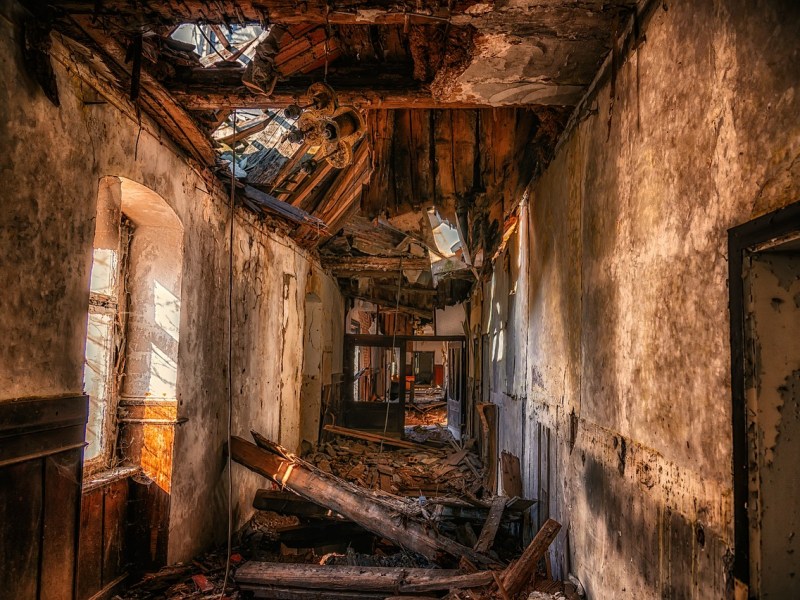
Science, Order, and Chaos
Sixth in a series on the edges of science The Universe is a messy place, and there is much about it we don’t understand. Philosopher Dr. Jordan Peterson characterizes it as chaos, with little bits of order. No matter how much order we create, the chaos is lurking at the edges to take over. In…
Keep reading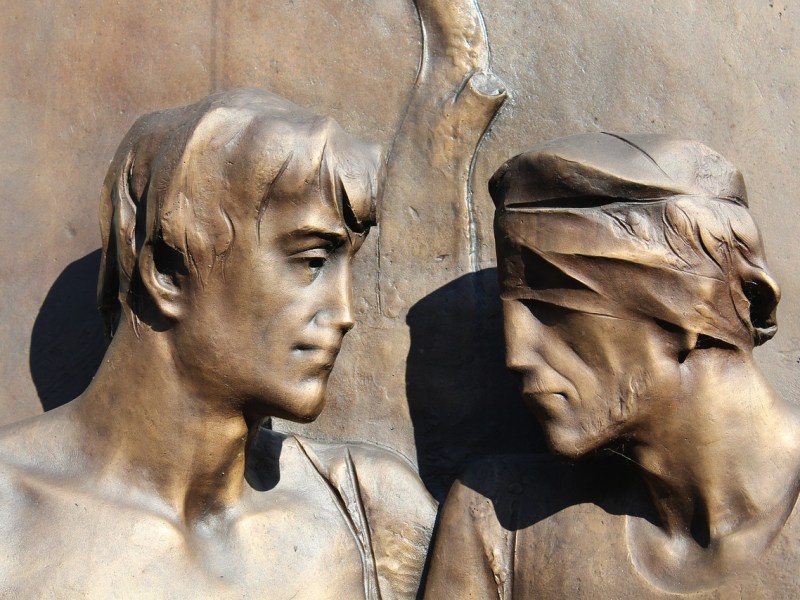
Science and “I Can’t See You”
Fifth in a series on the edges of science Observability is an important issue in control systems because it is essential to the closed-loop feedback on which control relies. We control a system—whether mechanical, electrical, or even social—by applying external influences to it that change its operation, while observing the results. In control theory, the…
Keep reading
Science and Complexity
Fourth in a series on the edges of science We say something is complex when we find it difficult to understand. This definition is intuitive, but not very useful in a scientific way. Cambridge Dictionary carries it a bit further, defining complexity as “the state of having many parts and being difficult to understand or…
Keep reading
Science and Reproducibility
Third in a series on the edges of Science. Reproducibility is at the core of science. If an experimental effect can be reproduced by others, then it confirms the hypothesized theory. Usually, the theory is then treated as Truth—at least, until a countering (or extending) theory can be proven. But how reproducible are the results…
Keep reading
Science and Truth
Second in a series about the edges of Science. Science and engineering rely on the repeatable. Two hundred years ago, Georg Ohm experimentally discovered a linear relationship between voltage (V) and current (I), leading to the formulation of “Ohm’s Law” stated as V=IR. The mathematical constant in the linearity became known as “resistance (R).” Today,…
Keep reading
Is Science True?
The basic idea behind science fiction is to extend known science into the unknown, then explore the impact on people. This has been true from its beginnings with Mary Shelley, Jules Verne, and H.G. Wells. But what is “known science”? In the modern era, we rely heavily on the objective truth of science to inform…
Keep reading
A New Accolade
I’m very pleased to say that my novel Not Like Us has been accepted as a Science Fiction semi-finalist in the Florida-wide Royal Palm Literary Awards for 2023. Finalists will be announced in another month or so, and the awards are at the Florida WritersCon on October 22. Last year, my short story “Fishing Hands”…
Keep reading
The Writing Bug
A recent publication! Several months ago, my good friend Mark Newhouse asked if I would do a guest column for his article “The Writing Bug” in the local monthly magazine Village Neighbors. Mark is an accomplished author with multiple international awards, several for his acclaimed series The Devil’s Bookkeepers, based on true records from the…
Keep reading
Fantasy … or Science Fiction?
I’ve been reading science fiction long enough that I remember the “Golden Age,” when editor John W. Campbell of Analog magazine (earlier Astounding Science Fiction) guided the careers of such greats as Isaac Asimov, Robert Heinlein, Theodore Sturgeon, and Arthur C. Clarke. Lost in a library stack, I’d pull book after book off the shelf…
Keep reading
The Reality of Travel
So this morning I took this big boy in for annual servicing, a 3-1/2 hour round trip hooking and unhooking a tow car for the return trip. What does that have to do with writing? Well, I’m also working on my sequel novel tentatively titled “Khubar f’Elláh,” that involves a hiking pilgrimage of about 600km…
Keep readingAvailable as Speaker
By invitation, I have joined the Speakers Bureau of the Florida Writers Association, available to give various talks around the state on writing topics such as writing science fiction, book design, editing & revision, writing craft, and more. Find out more at Speakers Bureau. Doc HonourMarch 2023
Keep reading
Online Interview
Doc Honour in a streaming interview! I got together with Mike Roth of Open Forum in The Villages for a 25-minute audio interview about my book “Not Like Us.” Here’s a sample. You can listen to it at https://www.buzzsprout.com/1974255 @buzzsprout Find the book on Amazon at https://www.amazon.com/Not-Like-Us-Doc-Honour-ebook/dp/B0BQRLJK8G/ref=sr_1_1?keywords=B0BQRLJK8G&qid=1674503830&sr=8-1 Doc Honour March 2023
Keep reading
The Joy of Writing
So, the first novel is done and has moved into marketing. Do I stop? Or do I continue to write? There’s no question in my mind! I find writing to be a marvelous experience. To take an idea, frame it as a story, create interesting characters, fill it with tension and compelling language. What a…
Keep reading
What’s Next: Tales of Verdant
With Not Like Us now released, where is Doc Honour going next? The anthology Tales of Verdant has been in work since before I started on the novel, and I’m now returning to finish it. It’s a series of thirteen short stories placed on Verdant, where looming global war threatens to destroy the planet. How…
Keep reading
RELEASED: “Not Like Us”
I am pleased to announce the release of my premier novel Not Like Us, available now on Amazon in hard cover, paperback, or Kindle versions. How do you escape total socialism? Jake Palatin is forced to develop an antimatter bomb on the planet Verdant, where global war using his technology is terrifyingly close. Zofia, a woman…
Keep reading
Jacoby Palatin
Jake is young, brilliant, dedicated—a particle physicist and systems engineer, already near the top of his field. He’s working with antimatter in ways never attempted before. He leads a team of three other engineers, demonstrating skill in motivating people. Believing in the society in which he lives, he works to do what he can. But…
Keep reading
Zofia Dobrunik
Ah, Zofia! In the prime of life at twenty-six (Verdant years), well-proportioned with waist-length sleek black hair and grey eyes. Saucy, bold, competent, athletic, she attracts Jake Palatin’s attention right away. She plays zero-G racquetball, at the top of the ladder Zofia’s an implant technician, wearing the prescribed yellow coveralls of the Technology people in…
Keep reading
Berndt Denmark
At the time of Not Like Us, Denmark is the Director of General Defense for the country of Verdant Prime, sitting on the Solity Council as one of the seven top leaders of the country. Short and swarthy in complexion, his penetrating eyes notice everything. Denmark is a man of power with supreme confidence in…
Keep reading
Yitzak Goren
In my novel Not Like Us, to be released later this year, one of the key secondary players is Yitzak Goren. He is a leader of the Lazarite resistance, working to bring down the overbearing socialist government (“Solity”) of Verdant Prime. Modeled after Einstein, Yitzak is a brilliant man, a highly intelligent visionary who has…
Keep reading
Living on Verdant
What’s it like to live on the planet Verdant? In a prior post (Future History), you can see that Verdant was colonized from One Hope in 2555 AD (Earth years). It was the fifteenth human world. Air and biology were very compatible. Gravity was less at 0.94G. Verdant, however, presented some unique problems for humanity…
Keep reading
Not Like Us
People often ask, “Where do you get your ideas?” It’s probably the most common question authors hear. Most of the time, the answer is completely intangible. Ideas come from shared experience, from strange correlations, or even from Sir Terry Pratchett’s “inspirons” that sleet out of space into every mind, only taking root in those that…
Keep reading
Future History
My stories are mostly written at a point in time about 900 years in the future. Imagine, if you will, what the world was like in 1100 AD, a similar length of time in the past. Compare it with today. Technology in the past 150 years has given humankind many amazing tools—and yet day-to-day life…
Keep reading
Independence in the Islands of Winter
The Islands of Winter are in the far northern ocean, a brutally cold climate much of the year. Summers are short and beautiful, with each vale filled with forests of dark blue, green, and russet foliage using different photosynthetic chemicals. Higher slopes are bare tundra and rock with year-round snow. The islands attracted those people…
Keep reading
Religion in Rathas
Often in the history of humanity, people have discovered a spiritual life that brings serenity in the midst of calamity. Equally often, spreading such a discovery leads to ossification of ideas into rigid religions that negate the discovery itself. On old Earth, before and during colonization, the three warring sects of Christianity, Islam, and Hinduism…
Keep reading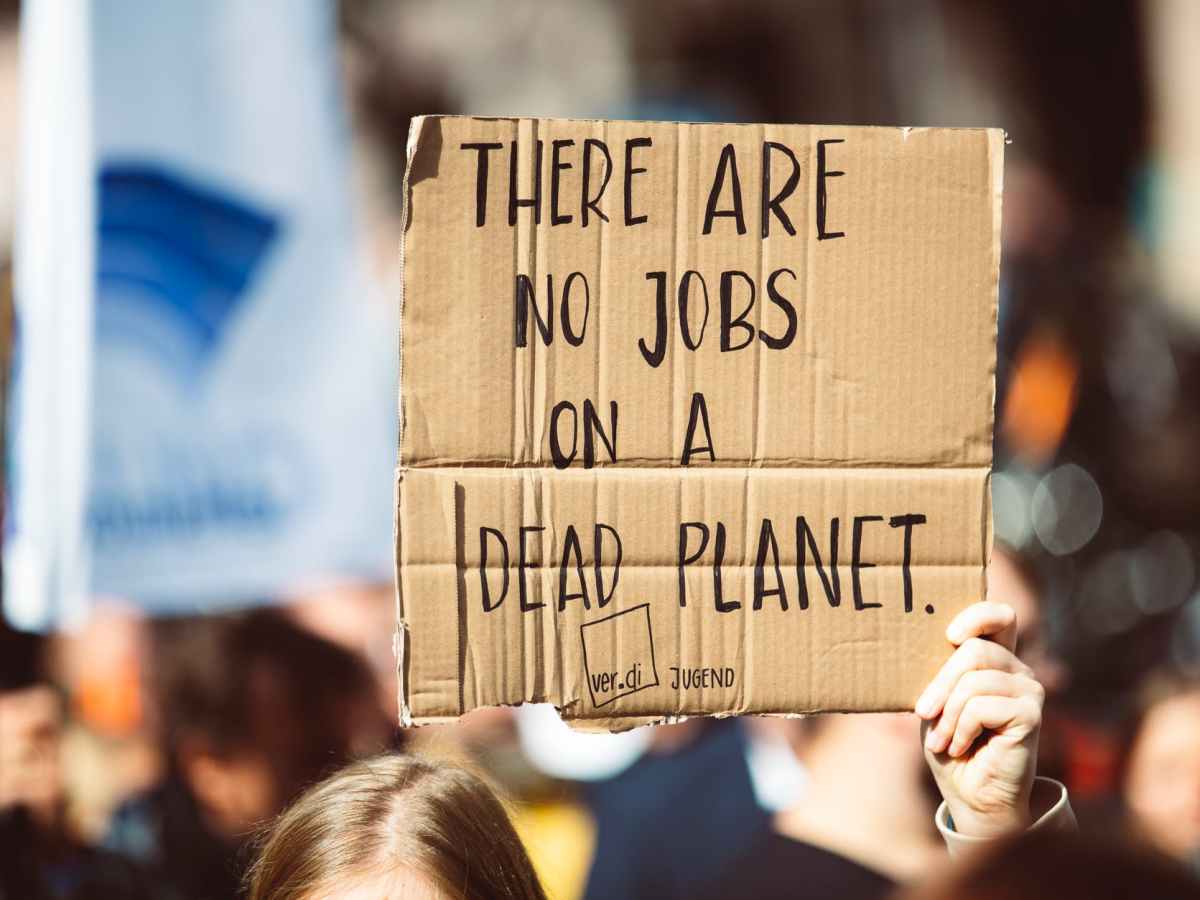
Democracy in Tileus
Is democracy always good? By a hundred local years After Touchdown, people had expanded to the Beta continent, to the north of Alpha across the Vissensee Channel. With greater distance from the capital in Oriens came less control and more freedom. In 186 AT, the residents of Beta rebelled against Verdant Prime. They wanted self-determination…
Keep reading
Socialism in Verdant Prime
Verdant was colonized 416 local years ago from the world of One Hope. The colony ship chose an ideal subtropical location on the southern “Alpha” continent, and Captain Mueller initiated the massive offload of materials, equipment, and people. Shipboard life had been necessarily restrictive, controlled with the captain’s strong hand, and setting up the colony…
Keep reading
Technology
One of the things I’ve always loved about science fiction is the assumed creativity to envision new technologies. In the future world of Verdant, some key technologies provide a different life than we have today. Repellor beams are used widely. They’re extremely efficient, providing a great deal of force for little electric input, even seeming…
Keep reading
Space Travel
The repellor beam became the key technology to open space. Inexpensive and energy efficient, it pushes away any mass within its beam. Or—in another sense—it pushes you away from any larger mass. It found immediate use in transportation, machinery, and even weapons. Friction-free bearings, non-explosive motive power, projectile expulsion, space travel, and much more. In…
Keep reading
Worlds ahead of us
Imagine a future, hundreds of years from now, in which humankind has solved the problems of space travel. Colony ships go to dozens of worlds. Travel takes months to years, but excitement and opportunity reign. Some of the ships disappear, never reporting back. Most succeed, and humankind no longer has all its eggs in one…
Keep reading Doc Honour Books