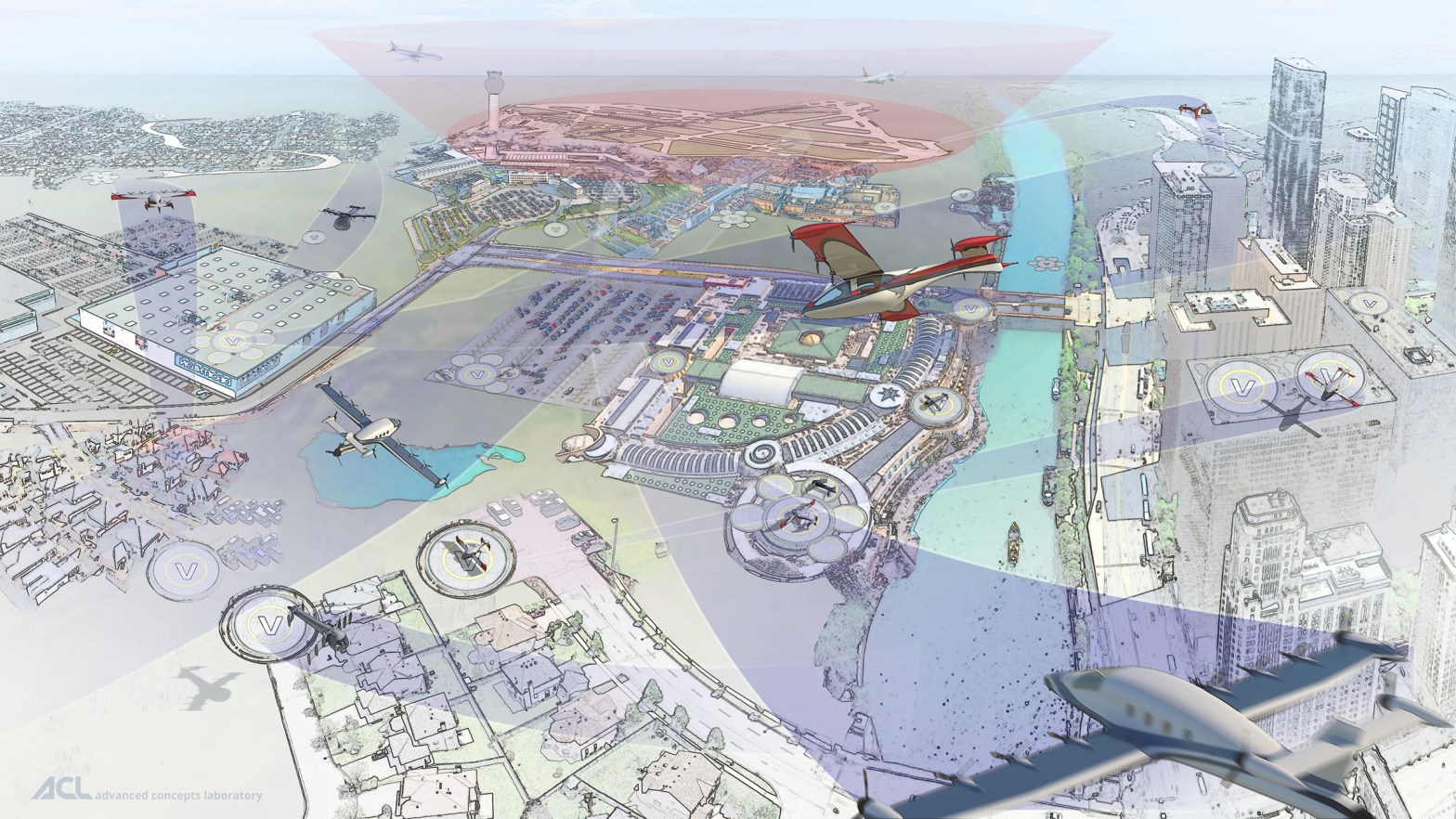
One of the things I’ve always loved about science fiction is the assumed creativity to envision new technologies. In the future world of Verdant, some key technologies provide a different life than we have today.
Repellor beams are used widely. They’re extremely efficient, providing a great deal of force for little electric input, even seeming to violate the First Law of Thermodynamics. They lift cars and let them slide along with practically no friction. Very small beams remove the need for bearings in mechanical devices, again creating nearly frictionless machines. They are used in weapons as the propulsive force for needle guns, missiles, and more. And, of course, repellor beams have enabled effective space travel.
Transportation is all Artificial Intelligence controlled. Few people own vehicles, especially in cities, because they are on-call within minutes.
Most people have electronic implants that directly connect to their sense nerves. They carry their InfoNet connection with them at all times and are rarely out of range. People can “see” results “behind their eyes” and “hear” results inside their head. They command the implant sub-vocally or with direct thoughts.
Computer access points are still useful for the organization of displays and information that don’t comfortably fit “inside their heads.” Interface to the computers is through implant control, haptic sensors (i.e. hand-waving), and holographic 3-D displays.
Interstellar communications is through ansible (for which word we all can thank Ursula K Le Guin). In the Verdant universe, the ansible uses spin-linked electrons: whatever is put into one spin-linked electron port appears instantaneously at the other port at any distance. As a result, while travel between worlds can take months to years, communications happens in real time. This leads to an interesting dilemma in which people may know what is happening on other worlds, but have little ability to help or affect those events.
 Doc Honour Books